

The Biology of Cat Love: How Cats Choose “Their Person”

Subtitle (editorial teaser): Love isn't random. It's chemical, behavioral, and earned one slow blink at a time.
Luxury Editorial Introduction:
Cats don't love indiscriminately. They select.
That nuzzle against your chin, the weight of a sleeping cat on your lap, the slow blink from across the room: none of it is accidental. These are calculated gestures rooted in biology, memory, and chemistry. Your cat isn't just being affectionate. They're telling you something about trust, territory, and emotional safety.
Science now confirms what cat owners have always suspected. Feline love is real. It's measurable. And it follows patterns we're only beginning to understand.
How Cats Form Attachments
Cats develop attachment styles similar to human infants.
A 2019 study published in Current Biology tested cats using a "secure base test," the same method researchers use with babies and dogs. The results surprised skeptics. Roughly 65% of cats displayed secure attachment to their caregivers. When their person returned after a brief absence, securely attached cats relaxed and resumed exploring. Insecure cats either clung anxiously or avoided contact altogether.
What This Tells Us
Cats aren't aloof by nature. They're selective by design. A secure bond requires consistent positive experiences over time.
Signs of Secure Attachment:
-
Following you from room to room
-
Relaxing visibly when you return home
-
Slow blinking in your direction
-
Sleeping near or on you regularly
The Role of Oxytocin

Oxytocin is often called the "love hormone." It drives bonding between mothers and infants, romantic partners, and yes, cats and their humans.
A Japanese study found that brief petting sessions increased oxytocin levels in cat owners. The cats showed elevated oxytocin, too, particularly those with secure attachment styles. Cats who initiated contact and hovered near their owners experienced the largest hormonal boost.
Here's the catch: forced interaction kills the effect. When researchers observed cats with anxious or avoidant attachment styles, oxytocin levels dropped after unwanted handling. The chemistry of love only flows when the interaction respects the cat's boundaries.
|
Attachment Style |
Oxytocin Response |
Behavior Pattern |
|
Secure |
Increases after interaction |
Initiates contact, relaxed |
|
Anxious |
High baseline, drops with handling |
Clingy but easily overwhelmed |
|
Avoidant |
No significant change |
Keeps distance, minimal contact |
Scent Bonding Explained
Cats live in a world of scent. Their sense of smell is 14 times stronger than ours.
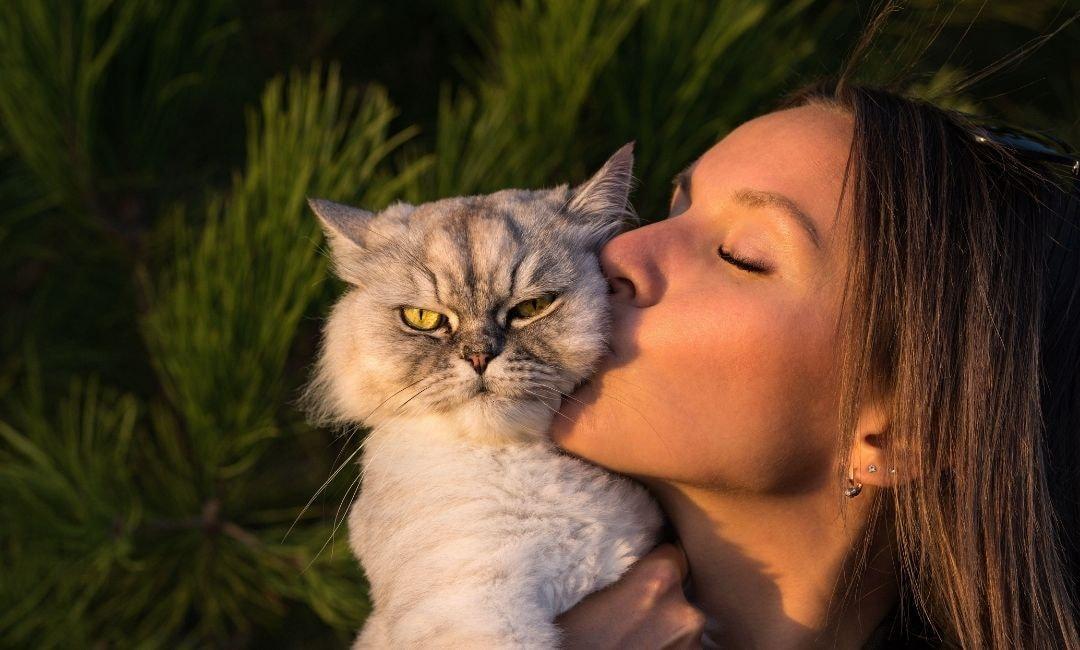
When your cat rubs their face against your hand, they're depositing pheromones from glands located around their cheeks, chin, and forehead. This isn't just affection. It's marking. They're claiming you as part of their social group, embedding their scent into your skin as a signal of trust and territory.
Scent familiarity plays a significant role in how cats choose their favorite person. They gravitate toward individuals whose smell feels safe and predictable. Sudden changes in your scent, like new perfume or unfamiliar laundry detergent, can temporarily confuse the bond.
Pro Tip: If you're trying to strengthen your connection, wear the same subtle scent consistently. Cats appreciate predictability more than novelty.
What Makes Someone "The Favorite"

It's rarely the person who tries hardest.
Cats often choose the human who respects their boundaries, maintains a calm presence, and offers consistent routines. The person who feeds them at the same time daily, speaks in soft tones, and waits for the cat to initiate contact usually wins.
Key Factors:
-
Routine and predictability (feeding, play, quiet presence)
-
Body language literacy (recognizing when to engage vs. retreat)
-
Quality over quantity (meaningful moments beat hours of passive coexistence)
-
Respect for personal space (no forced cuddles or sudden grabs)
Interestingly, cats sometimes favor people who seem indifferent. This isn't spite. It's comfort. A person who doesn't pursue them feels less threatening, allowing the cat to approach on their own terms.
Historical Views on Cat Affection
Ancient cultures recognized the selective nature of feline love long before scientists measured oxytocin.
In ancient Egypt, cats were revered as protectors of the home. A cat's choice to stay with a particular family was seen as a blessing. Households with devoted cats were believed to enjoy prosperity and safety.
Japanese folklore echoes this sentiment. The Maneki-neko, or beckoning cat, symbolizes fortune and good relationships. The gesture of a cat reaching toward someone represents invitation, trust, and chosen connection.
Building a Stronger Bond

You can't force a cat to love you. But you can create conditions where love becomes likely.
Practical Steps:
-
Maintain consistent feeding times
-
Offer play sessions that match their energy level
-
Use slow blinks to signal safety (cats often blink back)
-
Avoid direct eye contact during first meetings
-
Let them come to you rather than reaching for them
The Personalization Factor
Cats bond more deeply with spaces and objects that carry a familiar scent. A Personalized Cat Blanket placed in their favorite resting spot reinforces the connection between comfort and your presence. Over time, they associate that space with safety and you.
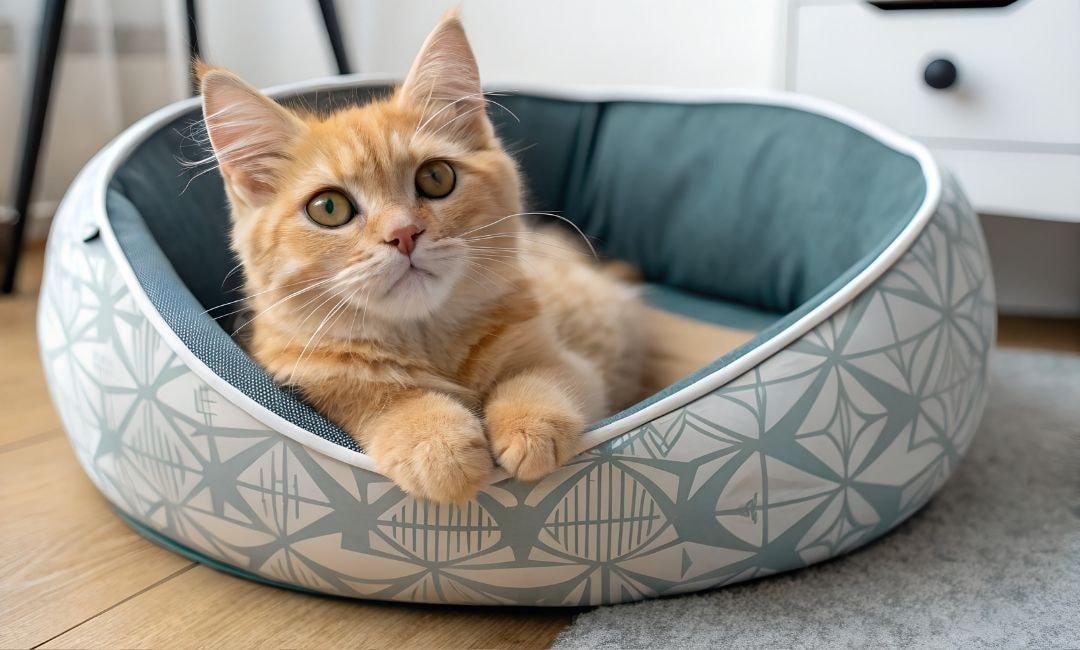
For cats who prefer enclosed sleeping areas, a Custom Cat Bed with your cat's name or photo creates a dedicated territory they'll return to instinctively.
Conclusion
The biology of cat love isn't mysterious once you understand the mechanics. Oxytocin, scent bonding, attachment styles, and respect for boundaries all play measurable roles in how cats choose their favorite person.
You don't earn a cat's love through grand gestures. You earn it through quiet consistency, predictable routines, and moments of genuine connection.
Want to deepen the bond with your cat? Browse Chic Kitty's Personalized Cat Blankets and Custom Cat Beds to create a space that feels unmistakably theirs. Explore the collection and make the connection personal.
FAQs
Do cats really have a favorite person?
Yes. Research shows cats form attachment styles similar to human infants and often display stronger bonds with one primary caregiver based on routine, respect, and positive interactions.
How does oxytocin affect cat bonding?
Oxytocin increases during positive interactions like petting and play, strengthening the emotional connection between cats and their owners. Forced handling reduces oxytocin in cats with insecure attachment styles.
Why does my cat rub against me?
Cats deposit pheromones through facial rubbing to mark you as part of their social group. It signals trust, territory, and emotional safety.
Can I become my cat's favorite person?
Yes. Maintain consistent routines, respect their boundaries, initiate gentle play, and allow them to approach you on their terms. Quality interactions matter more than time spent.
Why does my cat prefer someone who ignores them?
Cats feel safer around people who don't pursue them aggressively. A calm, non-threatening presence allows the cat to approach without feeling cornered.
:%20Love%20isn't%20random.%20It's%20chemical,%20behavioral,%20and%20earned%20one%20slow%20blink%20at%20a%20time.%0ALuxury%20Editorial%20Introduction:%0ACats%20don't%20love%20indiscriminately.%20They%20select.%0AThat%20n...)