
Winter Cat Care Tips for a Cozy Season
 When temperatures drop, cats seek warmth — here's how to keep comfort elegant and effortless.
Winter transforms your home into a haven of warmth and soft blankets. Your cat knows it too.
As temperatures drop, indoor cats start seeking out the coziest spots in your house. They're not being dramatic — they're being smart. Cats regulate body temperature differently from humans, and cold weather affects their comfort and health.
We're sharing winter care strategies that go beyond the basics. Think draft-proofing, hydration hacks, and grooming tips that prevent mats before they form. Hugo the Minskin has mastered the art of winter comfort, and we're letting you in on his secrets.
Keeping Indoor Cats Warm
Your cat's favorite summer spots might turn icy in winter.
Map Your Home's Sun Spots
Track where sunlight streams in during different times of day. Place cat beds or blankets in these warm zones. Cats will naturally gravitate toward them.
-
Morning sun spots: East-facing windows.
-
Afternoon warmth: South-facing rooms
-
Evening glow: West-facing windowsills
Draft-Proof Like a Pro
Check windows and doors for cold air leaks. That chill you barely notice? Your cat feels it intensely.
Quick fixes:
-
Use draft stoppers under doors
-
Apply window insulation film on single-pane windows
-
Seal gaps around door frames with weatherstripping
-
Place rolled towels along windowsills
Pro tip: Pay attention to floor-level temperatures. Cold air sinks, and your cat spends most of their time closer to the ground than you do. Rugs and carpet runners create insulation barriers.
Elevate Their Sleeping Spots
Cat trees and wall-mounted perches keep them off frigid floors. Heat rises, so higher sleeping areas stay naturally warmer.
Our Custom Personalized Cat Photo Bed provides a plush, insulated sleeping surface that keeps the chill away. The raised edges create a cozy nest effect that cats love during the winter months.
Ideal Temperature Guide
|
Cat Type |
Recommended Temp |
Special Notes |
|
Adult cats |
68-72°F |
Standard comfort zone |
|
Senior cats |
70-75°F |
Arthritis relief needed |
|
Kittens |
70-75°F |
Still developing regulation |
|
Hairless breeds |
72-78°F |
Limited natural insulation |
Don't crank up the thermostat too high. Cats adapt well to normal indoor temperatures. Overheating can cause dry skin and respiratory issues.
Pro tip: Place beds away from exterior walls. Interior walls retain more heat, creating warmer sleeping zones.
Hydration and Humidity Solutions
Winter air is brutal for hydration. Heating systems strip moisture from the air, leaving everyone parched.
Increase Water Access Points
Cats are notoriously bad at drinking enough water. Add dry winter air to the equation, and you've got a recipe for dehydration.
Strategic water bowl placement:
-
One in each main living area
-
Near favorite sleeping spots
-
Away from litter boxes
-
In warm (not hot) locations
Switch to wider, shallow bowls. Cats dislike it when their whiskers touch the sides. A wider dish encourages more frequent sips.
The Moving Water Advantage
Consider a cat water fountain. Moving water attracts cats instinctively. The sound and motion trigger their curiosity and increase water intake by up to 40%.
Fountain maintenance checklist:
-
Clean weekly to prevent bacteria
-
Change filters monthly
-
Check the pump function regularly
-
Use filtered water to reduce mineral buildup
Boost Moisture Through Food
Add wet food to your cat's diet if they primarily eat dry kibble. Wet food contains 70-80% moisture and significantly boosts hydration.
Pro tip: Mix wet food with warm water to create a hydrating "soup" your cat will love.
Our Custom Cat Photo Stainless Steel Water Bottle keeps your hydration on point while you're monitoring theirs. Staying hydrated is a team effort.
Fix the Dry Air Problem
Humidity levels drop dangerously low in winter. Aim for 30-50% relative humidity.
Signs your home is too dry:
-
Static shocks when petting your cat
-
Flaky skin on your cat's nose or paw pads
-
Increased thirst but decreased drinking
-
Dry, brittle whiskers
Humidity solutions:
-
Run a humidifier in high-traffic cat areas
-
Place water bowls near heat vents
-
Add houseplants (cat-safe varieties only)
-
Crack a bathroom door after hot showers
Dehydration Warning Signs
|
Symptom |
What to Check |
Action Needed |
|
Sunken eyes |
Look for a hollow appearance |
Call the vet the same day |
|
Dry gums |
Should be moist and pink |
Offer water, monitor |
|
Skin tenting |
Pinch test at the shoulders |
Vet visit if slow return |
|
Lethargy |
Energy level changes |
Vet visit if persistent |
Keep feeding areas clean and inviting. Our Custom Personalised Name Cat Food Mats contain spills and keep water bowls from sliding around. They're easy to wipe clean and add a personalized touch to your cat's dining station.
Gentle Grooming for Winter Coats
Winter coats get thicker, which means more shedding and higher mat risk.
Create a Brushing Schedule
Cats grow a heavier undercoat as temperatures drop. This extra fluff keeps them warm but requires maintenance.
Recommended frequency:
-
Short-haired cats: 2x per week
-
Medium-haired cats: 3- 4x per week
-
Long-haired cats: Daily
-
Senior cats: Daily (gentler sessions)
The Right Tools Matter
|
Tool Type |
Best For |
When to Use |
|
Slicker brush |
Topcoat detangling |
Primary grooming |
|
Metal comb |
Undercoat work |
After brushing |
|
Deshedding tool |
Heavy shedding periods |
1x per week max |
|
Finger brushing |
Sensitive areas |
Face and paws |
Proper Brushing Technique
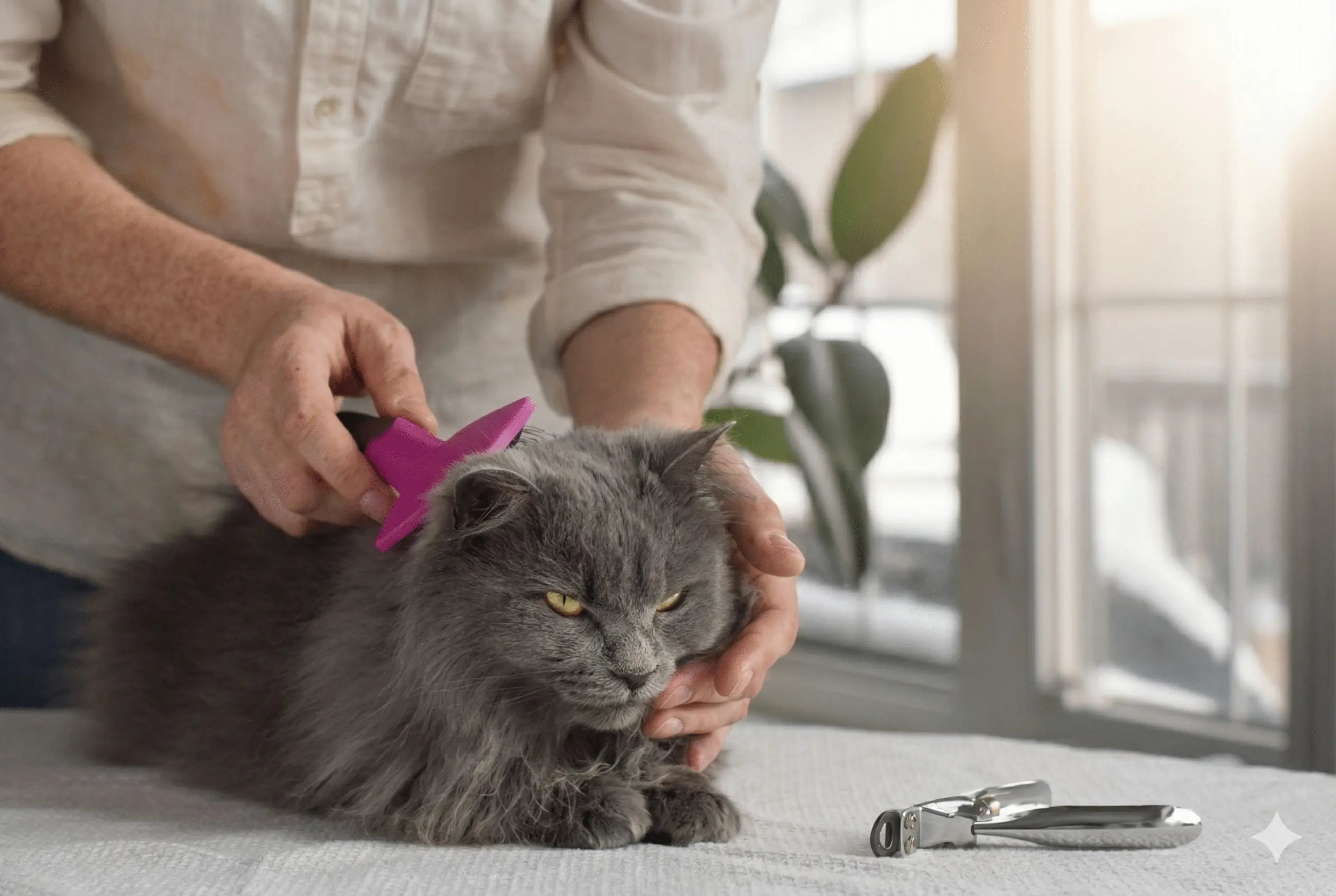
Start at the head and work toward the tail. Be gentle around sensitive areas, such as the belly and legs.
High-risk mat zones:
-
Behind the ears
-
Under the armpits
-
Around the rear
-
Inside the back legs
-
Under the collar
Pro tip: Check these spots every brushing session. Early detection prevents painful mats.
Mat Removal Done Right
Found a small mat? Work it out gently with your fingers or a wide-toothed comb. Never pull or cut mats without proper tools — you can injure your cat.
When to call a professional groomer:
-
Mats larger than a quarter
-
Mats close to the skin
-
Multiple mats in one area
-
The cat shows pain when touched
Combat Winter Dryness
Indoor heating dries out skin. Add omega-3 fatty acids to your cat's diet to support skin and coat health.
Natural skin support:
-
Fish oil supplements (vet-approved dosage)
-
Salmon-based wet food
-
Coconut oil (small amounts)
-
High-quality protein diet
Watch for excessive scratching or bald patches. Dry skin causes itchiness, and your cat might over-groom in response.
Nail Care Matters More in Winter
Trim nails every 2-3 weeks. Indoor cats don't naturally wear down their claws in winter like they might during outdoor summer adventures.
Safe trimming tips:
-
Use cat-specific clippers
-
Trim only the precise tip
-
Have styptic powder ready
-
Reward with treats after
Make Grooming Enjoyable
Keep sessions short — 5-10 minutes is enough. You want your cat to associate grooming with positive experiences, not stress.
Reward system:
-
Treats during brushing
-
Gentle praise throughout
-
Play session after grooming
-
Special toy reserved for grooming time
Pro tip: Static electricity becomes annoying in winter—a light misting of water before brushing helps. Avoid products made by humans that might contain harmful ingredients.
Creating Cozy Winter Retreats
Your cat needs designated comfort zones during cold months.
Layer for Warmth
Blanket materials that trap heat:
-
Fleece (washable and soft)
-
Faux fur (mimics natural warmth)
-
Wool blends (natural insulation)
-
Sherpa (plush and cozy)
Window Perch Paradise
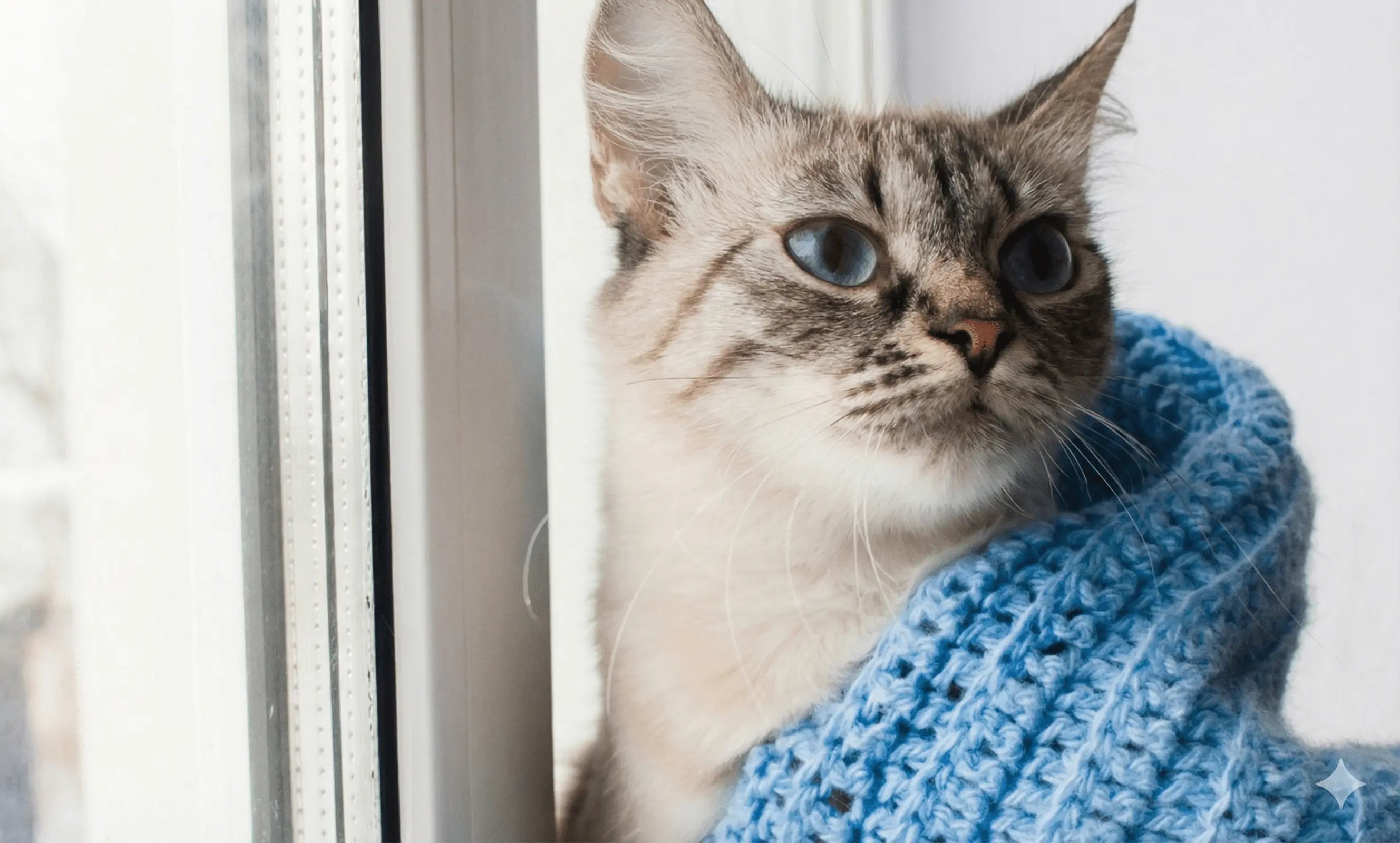
Create a window perch with a view. Cats love watching winter wildlife — birds at feeders, squirrels foraging, snow falling.
Perfect perch setup:
-
Cushioned base
-
Fleece blanket
-
Away from drafts
-
Direct sun exposure
-
Safe escape route
DIY Cozy Cave
Cardboard boxes become instant cozy caves. Cut an entrance hole, line it with a blanket, and watch your cat claim it within minutes.
Box modifications:
-
8-inch diameter entrance
-
Soft towel base layer
-
Removable blanket top
-
Place in a quiet corner
Our Gifts for the Pet Lover collection includes comfort-focused items that make winter more enjoyable for both you and your cat.
Maintain Activity Levels
Indoor cats get less natural exercise in winter. Daily play sessions prevent boredom and maintain a healthy weight.
Winter play schedule:
-
Morning: 10-minute wand toy session
-
Afternoon: Puzzle feeder
-
Evening: 15-minute interactive play
-
Before bed: Calm laser pointer session

Winter Health Watch
Cold weather can mask or worsen health issues.
Arthritis Alert
Senior cat warning signs:
-
Reluctance to jump
-
Stiffness after sleeping
-
Avoiding stairs
-
Decreased grooming (can't reach)
Heated beds help arthritic cats tremendously. The gentle warmth soothes aching joints and improves mobility.
Weight Management
Weight gain sneaks up in winter. Reduced activity plus increased appetite equals extra pounds.
Body condition check:
-
Feel ribs easily without pressing hard
-
Visible waist when viewed from above
-
Slight abdominal tuck when viewed from the side
Adjust food portions if needed. Talk to your vet before making significant dietary changes.
Respiratory Monitoring
Symptoms needing vet attention:
-
Persistent coughing
-
Labored breathing
-
Wheezing sounds
-
Nasal discharge
Keep your cat's vaccinations current. Indoor cats aren't immune to illness, especially if you have other pets.
FAQ
Do indoor cats need extra warmth in winter?
Most indoor cats stay comfortable at normal room temperatures (68-72°F). Older cats, kittens, and hairless breeds benefit from extra warmth through heated beds or additional blankets. Watch for signs they're cold: curling into tight balls, shivering, or constantly seeking heat sources.
How can I tell if my cat is dehydrated?
Check skin elasticity by gently pinching skin between the shoulder blades. It should snap back immediately. Other signs include sunken eyes, dry gums, lethargy, and decreased urination. Increase the number of water bowls and consider a cat fountain.
How often should I groom my cat in winter?
Brush short-haired cats twice weekly and long-haired cats daily during winter. Their coats thicken, leading to more shedding and mat formation. Regular grooming prevents painful tangles and reduces the formation of hairballs.
What humidity level is best for cats?
Aim for 30-50% relative humidity. Below 30% causes dry skin, static shocks, and respiratory irritation. Above 50% can promote mold growth. Use a hygrometer to monitor levels and adjust with humidifiers or dehumidifiers.
Final Thoughts
Winter care doesn't have to be complicated.
Map your home's warm spots. Keep water fresh and accessible. Brush regularly to prevent mats. These simple actions create a comfortable environment that supports your cat's health and happiness.
Your cat will thank you with extra purrs and cozy cuddles.
Shop winter essentials at ChicKittyShop.com 🐱 | Follow @chickitty2023 ✨ Featuring @HugoTheMinskin
winter cat care, keep indoor cats warm, cat humidity tips, cat grooming winter, indoor cat health