
Article: Lucky Cats in History: Fortune Symbols Around the World
Lucky Cats in History: Fortune Symbols Around the World

Fortune wears fur. Across centuries and continents, cats have beckoned wealth, warded off evil, and blessed the homes that welcomed them.
Cats have never been ordinary companions. They've been gods, guardians, and good luck charms.
Long before the internet turned them into memes, cats occupied sacred roles in human civilization. Ancient Egyptians mummified them. Medieval Europeans feared and revered them. Japanese merchants placed ceramic cats at their shop entrances, believing a raised paw would beckon customers and coins.
These weren't random superstitions. They were cultural responses to an animal that seemed to exist between worlds: domestic yet wild, affectionate yet independent, visible yet mysterious. Understanding how cats became symbols of fortune reveals something deeper about the civilizations that honored them.
Sacred Guardians of Ancient Egypt
In ancient Egypt, cats were divine.
The goddess Bastet, depicted with a cat's head, represented protection, fertility, and the home. Egyptians believed cats warded off evil spirits and brought blessings to households that treated them well. Harming a cat was a serious crime, sometimes punishable by death.
Egyptian Cat Beliefs:
-
Cats protected homes from venomous snakes and scorpions
-
Mummified cats accompanied owners into the afterlife
-
Black cats were especially revered as embodiments of Bastet
-
Families shaved their eyebrows in mourning when a cat died
This reverence lasted over 3,000 years. Even after Rome conquered Egypt in 30 BC, the cultural memory of sacred cats persisted in folklore and art across the Mediterranean.
The Beckoning Cat of Japan

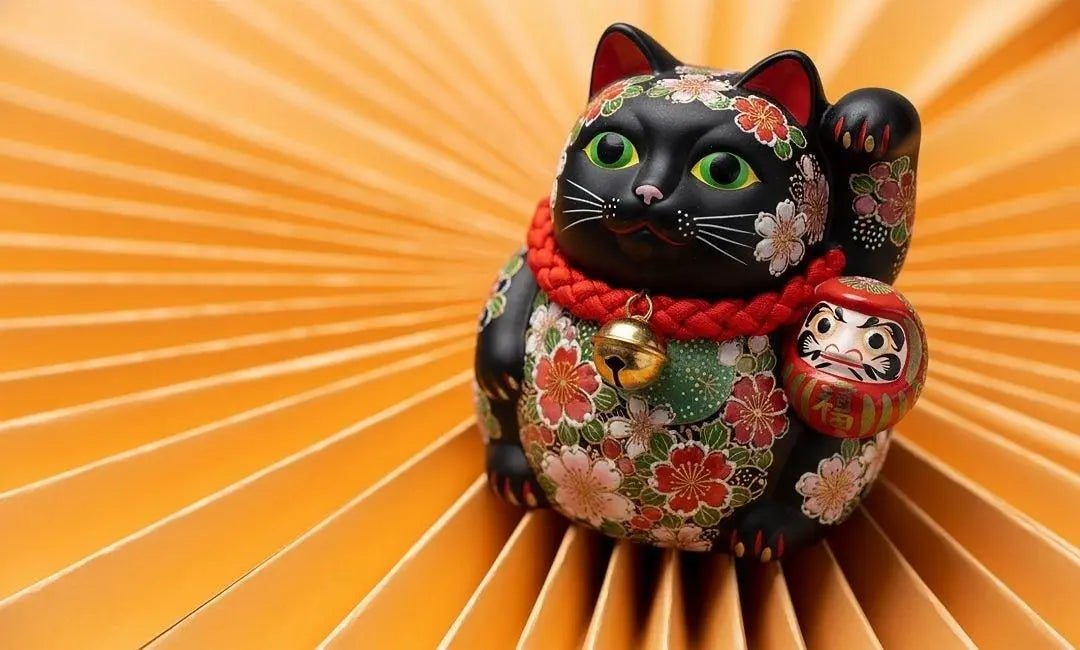
The Maneki-neko, or "beckoning cat," is perhaps the most recognized lucky cat symbol in the world.
Originating in Japan's Edo period (1603-1868), these ceramic figurines depict a cat with one paw raised in a welcoming gesture. The raised paw isn't waving. It's beckoning, inviting fortune to enter.
|
Paw Position |
Meaning |
|
Left paw raised |
Attracts customers and visitors |
|
Right paw raised |
Invites wealth and money |
|
Both paws raised |
Welcomes both people and prosperity |
Color Meanings:
-
White: General good luck and purity
-
Black: Protection from evil spirits
-
Gold: Wealth and financial fortune
-
Red: Good health and protection from illness
-
Calico (tri-color): Considered the luckiest of all
The most famous origin story involves a poor temple monk and a stray cat. The cat sat at the temple gate, beckoning to a passing samurai lord. Moments after the lord followed the cat inside, lightning struck the exact spot where he had been standing. Grateful for the cat's life-saving gesture, the lord became the temple's patron, restoring it to prosperity.
European Folklore and the Hearth Cat
In medieval Europe, a cat resting near the hearth was considered a sign of household blessing.
The hearth represented the home's most valuable warmth and protection. A cat who chose to stay close signaled that the home was safe, prosperous, and worthy of loyalty. This belief persisted in rural communities long after the Church associated cats with witchcraft during darker periods of European history.
Regional Variations:
-
Scotland: A black cat on your doorstep meant imminent wealth
-
Britain: Tortoiseshell cats were considered lucky; white cats less so
-
Ireland: Sailors kept black cats on ships for protection at sea
-
Wales: Laws from the 10th century valued a cat at four pence, the same as a full-grown sheep
The dual reputation of cats in Europe reflects their symbolic power. They represented both domestic comfort and mysterious independence, making them potent figures in folklore that celebrated and feared the unknown.
Cats in Celtic and Norse Traditions

Celtic mythology portrayed cats as guardians of the Otherworld, the realm of spirits and ancestors.
The Norse goddess Freyja, associated with love, fertility, and fate, rode a chariot pulled by two large cats. These weren't ordinary felines. They symbolized the wild, untameable aspects of nature that Freyja herself embodied.
In Celtic tradition, the Cat Sìth was a fairy creature resembling a large black cat with a white spot on its chest. Some believed it could steal souls, while others saw it as a protective presence. Either way, cats were never dismissed as mere animals. They occupied a space between the mortal and spiritual worlds.
Asian Traditions Beyond Japan
The Maneki-neko spread throughout Asia, adapting to local beliefs along the way.
In China, the beckoning cat is called zhao cai mao (fortune-inviting cat). It appears in restaurants, shops, and homes, often near cash registers or entrances. The Chinese adaptation emphasizes wealth attraction, aligning with feng shui principles about placement and energy flow.
In Thailand and Taiwan, similar figurines serve protective functions, believed to guard against negative energy and attract positive visitors.
Islamic tradition also holds cats in high regard. The Prophet Muhammad's documented fondness for cats led to their welcome in homes and even mosques. A cat's cleanliness and quiet presence aligned with values of purity and peace.
Celebrating Cat Symbolism Today

The legacy of lucky cats continues in modern homes and businesses.
September 29th is officially Maneki-neko Day in Japan. The Gotoku-ji Temple in Tokyo, considered the birthplace of the beckoning cat legend, displays thousands of figurines left by visitors seeking blessings.
For cat lovers, honoring this tradition doesn't require a trip to Japan. A Personalized Cat Photo Acrylic Plaque brings the spirit of celebration into your home, featuring your own cat as the centerpiece of your personal good fortune.
A Custom Cat Photo Wall Art piece transforms your living space into a tribute to the bond you share with your cat, echoing the ancient belief that caring for cats invites blessings in return.
Conclusion
Why have cats symbolized luck across so many cultures? Because they embody qualities humans have always admired: independence, grace, mystery, and loyalty to those who earn their trust.
From Egyptian temples to Japanese storefronts to Scottish doorsteps, the message remains consistent. Care for a cat, and fortune follows. Neglect or harm one, and consequences arrive.
The superstition may be ancient, but the affection is timeless.
Ready to honor your cat's place in your home? Browse Chic Kitty's Personalized Acrylic Plaques and Custom Wall Art to create a tribute that celebrates your cat as the good fortune they truly are. Explore the collection and make the connection visible.
FAQs
What does the Maneki-neko symbolize?
The Maneki-neko, or beckoning cat, symbolizes good luck and prosperity. Different colors and paw positions carry specific meanings, from wealth attraction to protection from evil.
Why were cats sacred in ancient Egypt?
Egyptians associated cats with the goddess Bastet, who represented protection, fertility, and the home. Cats also provided practical value by killing venomous snakes and pests.
Are black cats lucky or unlucky?
It depends on the culture. In Japan, Scotland, and parts of Britain, black cats are considered lucky. In some European and American traditions, they've been associated with bad omens.
What is September 29th in Japan?
September 29th is Maneki-neko Day, a celebration of the beckoning cat figurine. The date is a play on the Japanese pronunciation of the numbers 9-2-9, which sounds like "coming luck."
Why do cats appear in so many world mythologies?
Cats occupy a unique space between domestic and wild, familiar and mysterious. This duality made them powerful symbols for cultures exploring themes of protection, fortune, and the supernatural.