


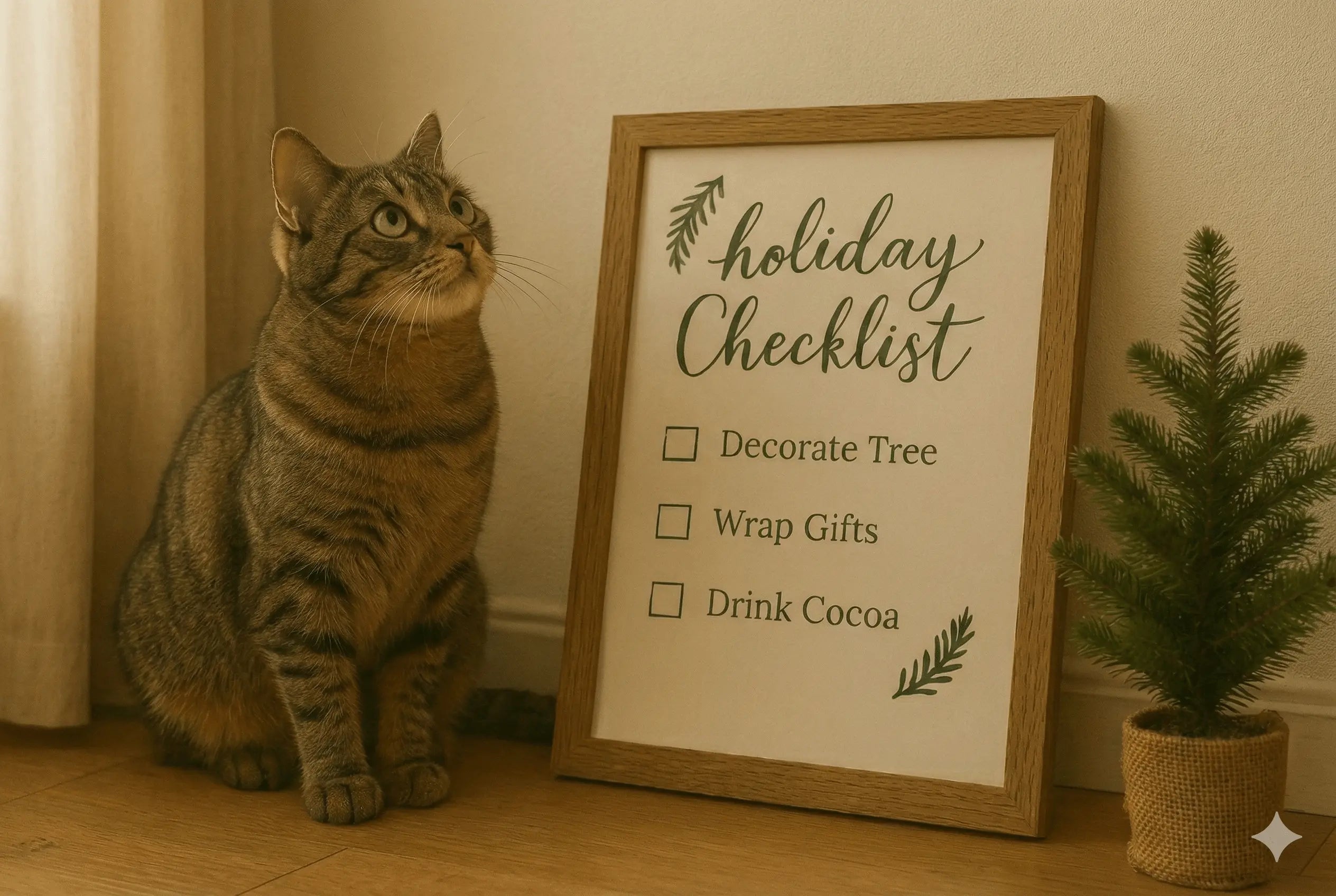
The Ultimate Cat Parent's Holiday Survival Guide
 The difference between surviving and savoring the holidays comes down to planning — for you and your cat. When your cat stays calm, you stay quiet, and everyone actually enjoys the season.
Holiday stress compounds fast when you're managing decorations, guests, travel plans, and a cat who thinks the tree is an enemy invader.
But it doesn't have to be chaos. Strategic preparation prevents most holiday cat disasters. We're giving you a comprehensive checklist that covers home prep, hosting protocols, and travel considerations — everything you need to navigate the season smoothly.
Hugo the Minskin has survived countless holidays with minimal stress because we treat planning like the gift it is. This guide is your roadmap to the same success.
Prepare the Home
Start holiday prep 2-3 weeks before major events.
Pre-Holiday Home Audit
Walk through your space from your cat's perspective — literally get on the floor and look around.
Audit checklist:
|
Area |
What to Check |
Action Needed |
|
Floor level |
Electrical cords exposed |
Cover or secure |
|
Windows |
Drafty spots near cat beds |
Add insulation or move beds |
|
High surfaces |
Unstable items, a cat could knock |
Secure or remove |
|
Escape routes |
Clear pathways to all rooms |
Remove obstacles |
|
Litter boxes |
Accessible, clean, and adequate number |
Add extra if needed |
This audit reveals problems before they cause emergencies.
Decoration Strategy
-
Phase 1 (Week 1): Introduce non-breakable decorations. Let your cat investigate while you supervise. This satisfies initial curiosity.
-
Phase 2 (Week 2): Add a tree (undecorated) and anchor it securely. Let your cat explore bare branches for 2-3 days.
-
Phase 3 (Week 3): Decorate the tree strategically — shatterproof items only in the bottom third, precious ornaments in the top third.
Gradual introduction prevents overwhelming your cat with sudden environmental changes.
Safe Room Setup
Designate a quiet room as your cat's sanctuary before any holiday stress begins.
Essential elements:
-
Litter box (not their main one — this is a retreat box)
-
Water bowl (changed twice daily)
-
Food bowl (if they'll be spending extended time there)
-
Comfortable bed with familiar bedding
-
Favorite toys
-
Scratching post or pad
-
Hiding spots (box, covered bed, under furniture access)
Stock the room fully before your first holiday event. Your cat should already view this space as comfortable and familiar.
Our Custom Personalized Cat Photo Bed creates an anchor point in their safe room — a familiar, comfortable spot that signals security even when the rest of the house feels chaotic.
Routine Protection Plan
Non-negotiable elements to maintain:
-
Feeding times (use phone alarms if your schedule shifts)
-
Play sessions (schedule 10-15 minutes daily)
-
Litter box scooping (twice daily minimum)
-
Bedtime routine (same time, same sequence)
Write these down. When holiday chaos hits, you'll forget without a visual reminder.
Vet Visit Timing
Schedule annual checkups and vaccinations before the holiday season begins. You don't want emergency vet visits competing with family gatherings.
Pre-holiday vet checklist:
-
Vaccinations current
-
Flea/tick prevention up to date
-
Any chronic conditions are well-managed
-
Prescription refills obtained
-
Emergency vet contact programmed in phone
Ask your vet about anti-anxiety medication options if your cat has a history of severe holiday stress. Getting prescriptions in advance prevents last-minute scrambling.
Hosting Guidelines
Guests are the most significant source of holiday stress for cats. Prepare them and your visitors.
Pre-Party Preparation (1 Week Before)
Guest communication: Send a brief message explaining cat rules:
"We're excited to host you! Quick note: Our cat may hide during the party. Please don't try to find or pet them, and avoid feeding them anything. Thank you for helping keep them comfortable."
Direct communication prevents well-meaning mistakes.
Home preparation:
-
Deep clean all litter boxes
-
Stock safe room with fresh supplies
-
Test that the room door closes securely
-
Place a "Do Not Disturb" sign on the safe room door
-
Remove toxic plants from entertaining areas
-
Secure all decorations that could be knocked over
Day-Of Party Protocol
4 hours before guests arrive:
-
Feed your cat their regular meal
-
Engage in a 15-20 minute active play session
-
Guide them to a safe room with high-value treats
-
Ensure fresh water and a comfortable temperature in a safe room
A tired, fed cat is more likely to sleep through parties than investigate strangers.
During the party:
-
Keep exterior doors monitored (indoor cats can bolt when stressed)
-
Check on the cat every 1-2 hours (quick, non-intrusive visit)
-
Refresh water if needed
-
Don't force interaction even if they seem curious
Guest boundary enforcement:
If guests ask to meet your cat: "They're resting right now, but I'll check later if they're receptive. Cats need to make the first move."
If guests ignore cat boundaries: "I appreciate your interest, but they're showing stress signals. Let's give them space."
Polite but firm boundaries protect your cat and prevent awkward situations.
Post-Party Reset (Same Night)
Immediate actions:
-
Remove all food and trash (prevents nighttime investigations)
-
Return furniture to its original positions if moved
-
Open safe room door (let cat exit on their terms)
-
Resume normal evening routine
Don't:
-
Force your cat out of the safe room
-
Overwhelm them with attention
-
Change their bedtime routine
Some cats emerge within minutes. Others need hours or overnight. Both are normal.
Keep feeding stations consistent throughout the holidays. Our Custom Personalised Name Cat Food Mats define their feeding space clearly, providing routine stability when everything else feels unpredictable.
Travel Considerations
Whether you're traveling with your cat or leaving them home, planning is critical.
Traveling With Your Cat
Only travel with cats if necessary. Most cats prefer staying home with a pet sitter.
If you must travel:
2 weeks before:
-
Schedule a vet checkup and obtain a health certificate if required
-
Acclimate the cat to the carrier (leave it out, feed treats inside, make it comfortable)
-
Gather supplies: food, bowls, litter, medications, comfort items
-
Book cat-friendly accommodations (confirm pet policies)
Travel day:
-
Feed a light meal 3-4 hours before departure
-
Place a familiar blanket in the carrier
-
Secure the carrier in the car (never unsecured in the vehicle)
-
Never leave a cat in a parked car (temperature dangers)
-
Offer water every 2-3 hours on long trips
At destination:
-
Set up a safe room immediately upon arrival
-
Place familiar items around the space
-
Keep your cat confined to one room initially
-
Gradually expand access if they seem comfortable
Leaving Your Cat Home
For trips under 3 days, a trusted friend or a professional pet sitter can provide daily visits.
For longer trips: In-home pet sitting or boarding at a cat-friendly facility.
The pet sitter briefing document should include:
-
Feeding schedule and amounts
-
Litter box cleaning frequency
-
Play/interaction preferences
-
Medication instructions (with demonstration)
-
Vet contact information
-
Emergency contact for you
-
Warning signs that require vet attention
-
House alarm codes and key locations
Home preparation for sitter:
-
Stock extra food, litter, and medications
-
Clean house thoroughly
-
Leave lights on timers
-
Set up a camera to check on the cat remotely (optional)
-
Prepare a safe room in case your cat becomes stressed
Our Personalised Cat Photo Bowl helps pet sitters identify which bowl belongs to your cat — a small detail that maintains routine when you're not there.
Boarding Facility Evaluation
If boarding is necessary, visit the facilities beforehand.
What to look for:
-
Separate cat-only areas (away from dogs)
-
Cage-free options or spacious enclosures
-
Quiet environment
-
Clean, well-maintained spaces
-
Knowledgeable, caring staff
-
Vet on-call or on-site
-
Webcam access to check on your cat
Red flags:
-
Strong odors
-
Overcrowding
-
Staff unfamiliar with cat behavior
-
Lack of enrichment (toys, perches, windows)
-
No emergency protocols
Tour multiple facilities and trust your instincts. The cheapest option isn't always the safest.
Emergency Preparedness
Hope for the best, plan for the worst.
Holiday-Specific Dangers
Keep these numbers accessible:
-
Your regular vet
-
24-hour emergency vet
-
ASPCA Animal Poison Control: (888) 426-4435
-
Pet Poison Helpline: (855) 764-7661
-
Backup pet sitter
Common holiday emergencies:
-
Tinsel ingestion (intestinal blockage)
-
Electrical burns from chewing cords
-
Plant poisoning (lilies, mistletoe, holly)
-
Chocolate or xylitol ingestion
-
Christmas tree water drinking
-
Ornament glass cuts
First aid kit essentials:
-
Vet contact information
-
Cat's medical records
-
Gauze pads and wrap
-
Antiseptic wipes
-
Digital thermometer
-
Tweezers
-
Styptic powder
-
Emergency blanket
-
Slip lead (for emergency transport)
Recognizing Emergencies
Call the vet immediately if:
-
Not eating for 24+ hours
-
Vomiting repeatedly or with blood
-
Difficulty breathing or rapid breathing
-
Seizures or tremors
-
Inability to urinate (male cats, especially — this is life-threatening)
-
Extreme lethargy or unresponsiveness
-
Ingestion of toxic substances
-
Severe injury or bleeding
Don't "wait and see" with cats. They hide illness until it's severe. When in doubt, call your vet.
Quick Reference Checklist
3 Weeks Before Holidays:
-
☐ Schedule vet checkup
-
☐ Set up a safe room
-
☐ Begin decorating gradually
-
☐ Stock emergency supplies
1 Week Before Events:
-
☐ Brief guests on cat rules
-
☐ Confirm pet sitter if traveling
-
☐ Deep clean litter boxes
-
☐ Test safe room setup
Day Before Events:
-
☐ Final litter box cleaning
-
☐ Stock safe room fresh
-
☐ Tire out the cat with play
Day Of:
-
☐ Feed a regular meal
-
☐ Play session
-
☐ Move to a safe room
-
☐ Monitor during event
After Events:
-
☐ Remove food/trash
-
☐ Reset environment
-
☐ Resume normal routine
-
☐ Allow your cat to decompress
FAQ
How early should I start holiday prep with my cat?
Start 2-3 weeks before your first major event. Gradual introduction of decorations and routine establishment helps prevent overwhelming your cat with sudden changes. Last-minute prep increases stress for everyone.
What if I can't maintain my cat's routine during the holidays?
Protect core elements — feeding times, play sessions, litter box maintenance. Everything else can flex. Even maintaining two out of three core routines significantly reduces stress compared to abandoning all structure.
Is it better to take my cat with me or leave them at home?
For most cats, staying home with a reliable pet sitter is less stressful than travel. Cats are territory-bonded, and familiar environments provide comfort even when you're away. Only travel with cats if staying home isn't possible.
How do I know if my cat needs anti-anxiety medication for the holidays?
Signs include: refusal to eat for 24+ hours, aggressive and dangerous behavior, self-harm through over-grooming, complete inability to function, or previous severe reactions to holiday stress. Consult your vet for assessment.
Final Thoughts
Holiday survival isn't about perfection. It's about preparation and flexibility.
You'll forget something. A decoration will break. Your cat will have a moment. That's normal. What matters is having systems in place that prevent minor issues from becoming disasters.
Hugo's smoothest holidays happen when we follow this guide. When we skip steps or rush preparation, stress shows up for both of us. The pattern is consistent and reliable.
Your calm is their calm. Plan the season like the pro you are.
Browse our Gifts collection for items that support your survival strategy — from feeding essentials to comfort products that make holiday routines easier for everyone.
Complete holiday survival hub at ChicKittyShop.com 🐱 | Follow @chickitty2023 ✨ Featuring @HugoTheMinskin
cat holiday survival guide, cat holiday tips, holiday cat care, cat parent guide, holiday pet planning